

Published on 20.8.2026
The main pathways European Medtech companies use to enter the U.S. market was changed in June 2026. Before Innokas QA/RA specialist Minna Eskola comments on this change, let’s have a brief look at what this pathway is in practice.
The FDA 510(k) is one of the primary regulatory pathways for bringing medical devices to the U.S. market. It is a premarket notification process in which a manufacturer demonstrates that its device is "substantially equivalent" to an already legally marketed device, known as a predicate.
This approach allows many moderate-risk (typically Class II) devices to reach the market without extensive clinical trials, making it faster and often less burdensome than more rigorous approval routes. The emphasis isn't on proving safety from scratch, but on showing that the new device performs correspondingly as something already approved.
The 510(k) is not a requirement within Europe. In the EU, devices are approved under the Medical Device Regulation (MDR) and must obtain a CE mark to be sold across the European Economic Area. However, European companies frequently use the 510(k) pathway to access the U.S. market, as it is one of the world's largest and most commercially important healthcare markets. Many global Medtech companies enter both pathways, MDR compliance for Europe and 510(k) clearance for the U.S., as part of a broader international market strategy. “It should be noted that the companies are not the sole deciders; the pathways are determined mainly based on the qualities of the device,” Minna reminds.
It’s also important to note that clearance in either the European or U.S. market does not automatically translate to successful entry in both. The EU MDR often requires more extensive clinical evidence, stricter documentation, and ongoing post-market surveillance compared to the 510(k) pathway. As a result, European manufacturers may find the U.S. pathway comparatively more predictable than MDR compliance and CE mark acquisition, but not always. “Finding the right predicates is often more work than anticipated,” Minna notes.
In June 2026, FDA updated its device exemption guidance for the first time since 2019. In this update, the list of device types that no longer require a 510(k) submission was expanded. The update adds several product codes covering well-characterized, low-risk technologies as 510(k) exempt, further building on the agency's existing exemption list.
This reflects a broader shift toward risk-based approach on the market entry, where regulatory effort is concentrated on higher-risk technologies while simpler, lower-risk devices face less administrative burden.
In the meanwhile, FDA continues their long run effort to clarify the selection and use of predicate devices in 510(k) submissions, aiming for valid and current equivalence determinations as device technology evolves. This isn't new to June 2026 but remains a part of the same broader push toward a more risk-optimized 510(k) program.
The 510(k) pathway remains a cornerstone of U.S. market access, but it is evolving, and not always in the direction of more paperwork. “Manufacturers considering a dual strategy covering both MDR and FDA requirements should review their products against the FDA’s June 2026 exemption expansion. Some devices that previously required a 510(k) submission no longer need one,” Minna advises.
“If a device is 510(k) exempt, a company may have a stronger base to enter the U.S. market first and use the revenue generated there to help fund MDR compliance costs before expanding into the EU,” Minna says. “However, this doesn’t reduce the work required to meet MDR requirements, and 510(k) exempt devices must still comply with the FDA’s general controls to be sold in the U.S.”
Understanding these changes is essential for optimizing the costs and resources and planning a global market entry strategy in an increasingly risk-based regulatory landscape.

If you are looking for expert guidance in navigating market entries and approval processes, Innokas quality and regulatory team would be happy to plan out the steps with you. Leave us a descriptive contact form through the link below and we will get back to you shortly.
Based on an interview with
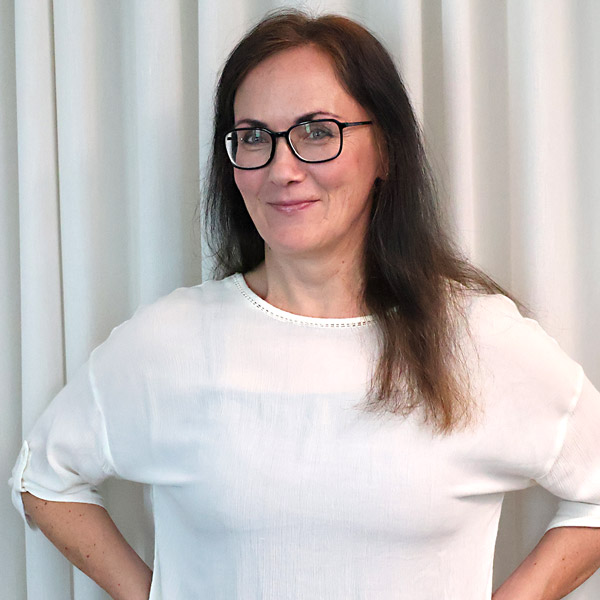
Minna Eskola
QA/RA specialist, Innokas
Minna Eskola has spent her career working with complex medical devices and their usability and gained firsthand insight into the challenges innovators face on the path to commercialization. Over the past six years at Innokas, she has helped companies navigate regulatory requirements and market entry strategies in both the U.S. and Europe.
Here you can find more of our latest news and insights in this category.
Here you can find more of our latest news, tips and insights.
.jpg)
Here you can find more of our latest news and insights.
Here you can find more of our insights, news and tips.

Here you can find more of our insights, news and tips.
.jpg)



.jpg)



.jpg)